28 Jan 2026
Rainwater Harvesting in Bengaluru: Best Storage Methods + BWSSB Rules Explained

The water story in Bengaluru is a combination of contradiction and irony. The city is home to thousands of startups and IT companies. But, sadly, it is grappling with water scarcity. The BWSSB can only supply around 900 million litres per day against an estimated demand of 1.5 billion litres daily. The demand gap is being filled by over 1,700 water tankers operating across the city.
The problem lies in the nexus among the tanker mafia, political networks, and BWSSB officials. Tanker operators have been known to create artificial shortages. For a middle-class family, this adds up fast in terms of cost.
This is a problem that can be effectively addressed by rainwater harvesting. It's also now mandatory under BWSSB regulations, with penalties reaching up to ₹5,000 and higher water bills for non-compliance.
This guide helps you understand the rules and how to use rainwater harvesting in Bengaluru to address the water crisis.
The BWSSB Rules in Bengaluru
The BWSSB has made rainwater harvesting mandatory for residents in Bengaluru. If you don't want to be penalised, it's important to understand the BWSSB rainwater harvesting rules.Who Is Rainwater Harvesting Mandatory For?
The rule divides the residential complexes into two categories –- Existing Buildings (built before 2009): If your property is 60 ft × 40 ft (2,400 sq. ft.) or larger, RWH is mandatory. The BWSSB gave existing homeowners until 2009 to comply, and enforcement has tightened since then.
- New Buildings (constructed after 2009): All new constructions on sites measuring 30 ft × 40 ft (1,200 sq. ft.) or larger must have an RWH system. Builders cannot get occupancy certificates without proving compliance.
The calculations
This is the legal formula BWSSB uses to determine your exact storage/recharge capacity requirement- Storage/Recharge Capacity = (Roof Area in sq. m × 20 liters) + (Paved Open Area in sq. m × 10 liters) Here is what it means –- 20 liters per square meter of roof area – This accounts for rainwater collected from your rooftop
- 10 liters per square meter of paved open space – This covers driveways, terraces, and other non-permeable surfaces
The Penalties
BWSSB does not levy the fines separately. Instead, these fines and penalties charge them to your water bill.- Initial Non-Compliance - You'll see an "Other Charges" section on your water bill. For the first 3 months of non-compliance, this is typically 50% of your monthly water bill amount.
- Escalated penalty – After three months, the penalty will be 100% of your monthly water bill.
How to prove compliance as per the BWSSB rules?
If you want to escape the penalties, you are expected to show a functioning rainwater harvesting system. Here is what you should do to ensure compliance – Installation Get your system installed by a qualified contractor (preferably BWSSB-trained plumbers) Self-Declaration Form + Photos Submit a self-declaration form along with photographs showing:- The gutters and downpipes
- The storage tank or sump connection
- The recharge well (if applicable)
- The filter system
Best Storage Methods for Bengaluru Homes
Here are a few of the best rainwater harvesting storage methods –Method 1: Store & Reuse (Sump Connection) – Most Practical
It is the most simple method. It involves collecting rainwater from your rooftop, channelling it through pipes, filtering it, and diverting it directly into your existing underground sump tank. What makes it the best choice?- Cheapest option – Uses your existing sump, so minimal cost
- Immediate results – You reduce BWSSB/tanker water dependency from day one
- Low maintenance – Just clean the filter periodically
- Satisfies BWSSB mandate – Proves functional usage
Method 2: Groundwater Recharge (Ring Well) – Long-Term Vision
The method uses rainwater to recharge the well. You need not necessarily use it for storing or immediate usage. This replenishes groundwater levels over time. What makes it a good option?- Refills your borewell – Gradually improves groundwater availability
- Reduces flooding – Prevents water from stagnating on surfaces
- Supports sustainability – You're giving back to the aquifer
Method 3: Rain Barrels (Above-Ground Tanks) – For Specific Needs
This involves the use of HDPE (high-density polyethylene) tanks placed on your terrace, or ground collect and store rainwater. You can use tanks with a capacity of 500–2,000 liters. Why is it a preferred method?- Easy retrofitting (no digging required)
- Perfect for gardening and car washing
- Quick to install
- Visible proof of compliance
Method 4: The Hybrid System (The "Gold Standard")
Most of the consultants in Bengaluru recommend this method. In fact, it is considered to be the most intelligent approach. In this method, the rainwater is collected after filtering into a tank or storage. The overflowing water is fed to the groundwater recharge system. Why it is ideal?- Meets BWSSB mandate perfectly – It satisfies both the 20 liters/sq. m (storage) and 10 liters/sq. m (recharge) requirements
- Maximizes water utility – You get immediate use AND groundwater recharge
- Cost-effective – Single filter handles both paths; no redundant installations
- Future-proof – As groundwater recovers, you can increase recharge capacity
Essential Components: The Technical Must-Haves
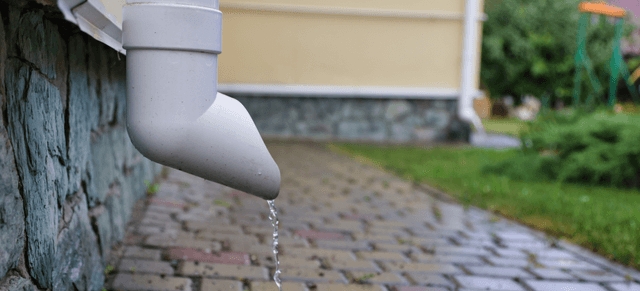
The rainwater harvesting system requires a few components that are specifically designed for your specific needs. Here are the prime components of a rainwater harvesting- Gutters & Downpipes PVC is primarily used for gutters and downpipes. The size recommendations would be –- 90 mm diameter – For roof areas up to 150 sq. m
- 110 mm diameter – For larger areas
- Wall-mounted filters – They work best for most homes. These filters require minimal maintenance.
- Sand bed filters – they let water pass through layers of sand, charcoal, and gravel. However, these systems require high maintenance.
- Low maintenance (crucial during monsoons when you're busy)
- Self-cleaning means consistent performance
- More durable in humid, high-heat conditions
Installation Costs & Maintenance: What You'll Actually Spend
The cost of rainwater harvesting in Bengaluru depends on multiple factors.| Home Type | Size | Estimated Cost | Components Included |
| Small Home | 30×40 ft (1,200 sq. ft.) | ₹20,000–₹40,000 | Basic piping, filter, storage connection |
| Medium Home | 40×50 ft (2,000 sq. ft.) | ₹40,000–₹70,000 | Piping, filter, sump upgrade, recharge pit |
| Large Home/Villa | 60×80 ft+ (5,000+ sq. ft.) | ₹70,000–₹1,20,000 | Multiple tanks, advanced filters, recharge well |
| Apartment Complex | 10–20 flats | ₹2–5 lakhs+ | Common tanks, shared filters, multiple wells |
Maintenance Checklist (Easy & Affordable)
Rainwater harvesting systems require consistent maintenance. Pre-Monsoon (May)- Clean your roof and gutters (remove dry leaves, debris)
- Check downpipe connections for leaks
- Inspect filter mesh for damage
- Estimate time: 1–2 hours
- Check the First Flush cap. Make sure that it is functioning
- Monitor sump water level
- Visual inspection for leaks in piping
- Clean filter mesh thoroughly
- Check recharge well for blockages
- Disinfect sump with chlorine if water quality seems questionable
- Estimate time: 2–3 hours
Step-by-Step Guide to Getting Started
The requirements from BWSSB may appear to be daunting. But, you need not fret. It is quite easy and simple to handle the task if you go through installation process carefully. Step 1: Calculate Your Roof Area- Measure the length and breadth of your roof
- Multiply to get total roof area in sq. meters
- Ensure contractor installs all components (gutters, filters, First Flush, pipes)
- Take photographs during installation
- Request an installation certificate (if contractor provides one)
Conclusion
The water crisis in Bengaluru is real. Rainwater harvesting is one excellent means to take control of the situation. It should definitely be a financially viable solution. Euroguard Hysquare offer you the best uPVC gutter system that's changing the game in Bengaluru. We offer durable and aesthetic looking gutter pipes that offer both looks and functionality. Don't wait for the next drought. Plan your system today. Contact a BWSSB-trained contractor this month, and by next monsoon, you'll have a functioning system that cuts your water dependency, stops the fines, and reclaims your home's water security.More Blogs

![Ever handled a situation where rainwater flows over and gutters get detached after a series of heavy showers? Assuming yes, then it may not be your gutters that are the cause of the problem, but rather your roofing material. One of the most popular options nowadays is UPVC roofing sheets, which are rather lightweight, cheap, […]](/_next/image?url=https%3A%2F%2Fadmin.euroguardhysquare.com%2Fwp-content%2Fuploads%2F2025%2F09%2FUPVC-Roofing-Sheets-Disadvantages-What-You-Need-to-Know-Before-Buying-5.png&w=3840&q=100)
Get in touch with us
Phone
1800 833 6675 