16 Dec 2025
How Rooftop Rainwater Harvesting Works: Components, Structure & Functionality

Imagine this – the summer season has just arrived, and you have been facing severe water shortage. Your water tanker bill has crossed over Rs 5000 a month. Your municipal water supply is erratic, and even the groundwater table is going down.
Well, the urban water scarcity has become a harsh reality. How to beat it?
Welcome to rooftop rainwater harvesting (RRH), a technique that's transforming how we think about water security.
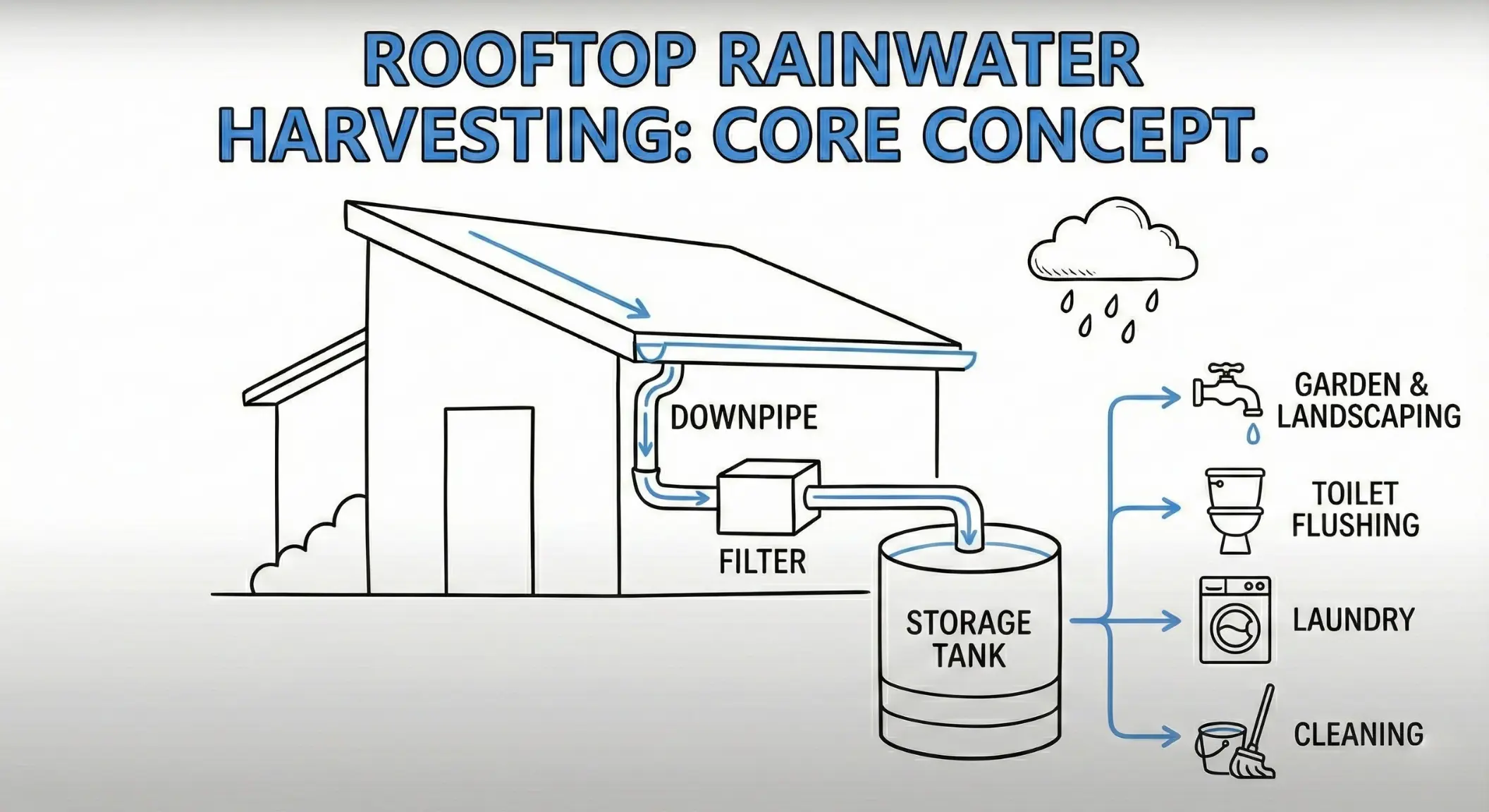 When the rain falls on your rooftop, it gets wasted as such due to gravity. However, with an effective rooftop rainwater harvesting system, you can make the same gravity your best friend. The best part of the RRH is that it does not need pumps and electrical systems to collect the rainwater. The entire process of collecting the rainwater and taking it to the appropriate storage takes place naturally – thanks to gravity.
That is exactly what makes the concept and the system cost-effective. In effect, rooftop rainwater harvesting uses pure physics, and no electricity is needed for storing water.
When the rain falls on your rooftop, it gets wasted as such due to gravity. However, with an effective rooftop rainwater harvesting system, you can make the same gravity your best friend. The best part of the RRH is that it does not need pumps and electrical systems to collect the rainwater. The entire process of collecting the rainwater and taking it to the appropriate storage takes place naturally – thanks to gravity.
That is exactly what makes the concept and the system cost-effective. In effect, rooftop rainwater harvesting uses pure physics, and no electricity is needed for storing water.
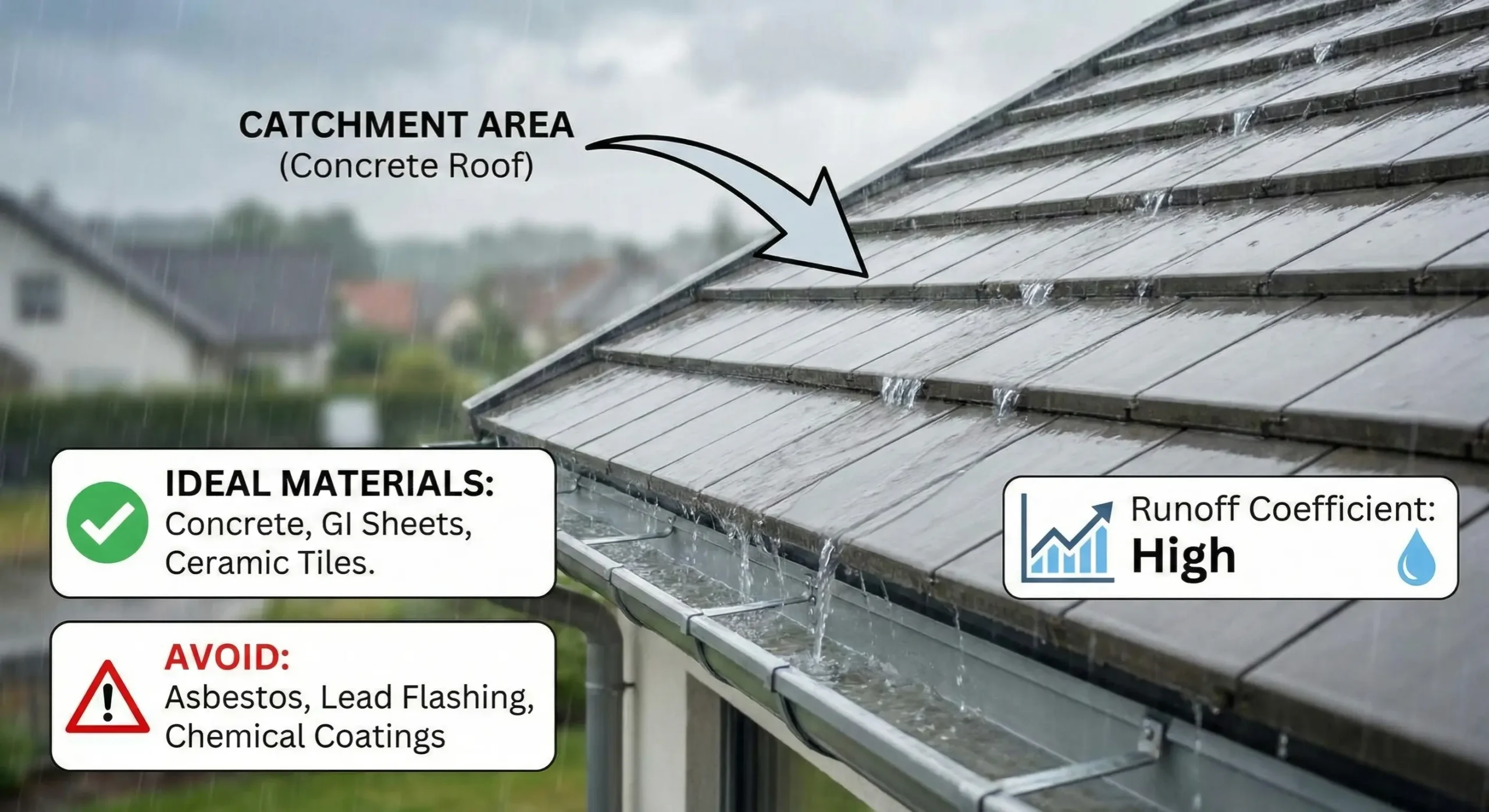 In the case of rooftop rainwater harvesting, your roof becomes your catchment area. It is the surface that catches water. The system then channelises the water to the system. However, you may need to make a few changes based on the exact roof type you have.
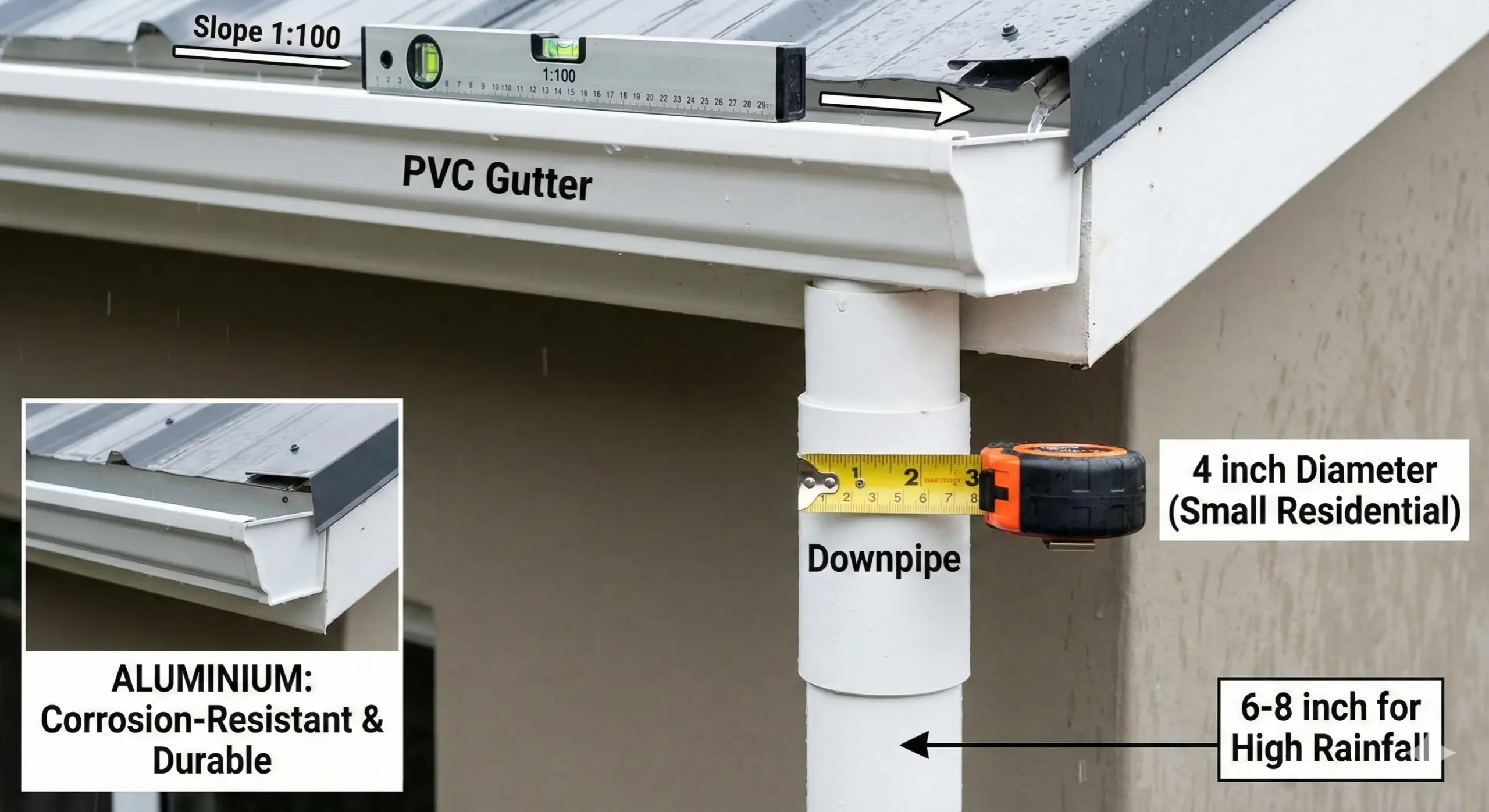 This includes gutters and downpipes. Once the rainwater is collected on your rooftop, it needs a channel to flow further. Gutters are the channels that are fixed at the edge of the roof. They help the water to flow down. Downpipes are the vertical channels that guide the water below.
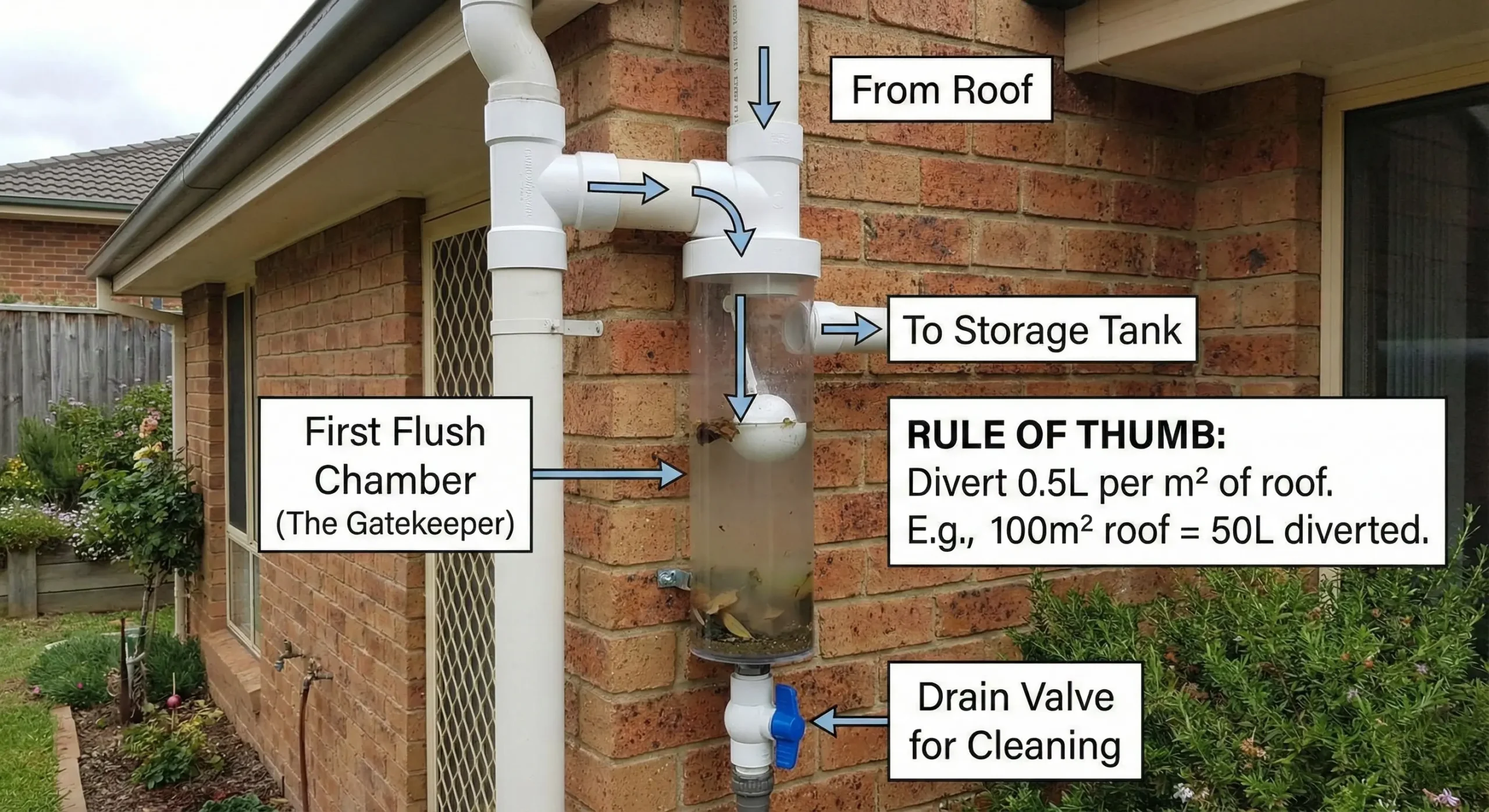 Also called the Gatekeeper, the diverter removes everything that is included in the first flush of water. This would include bird droppings, dust, leaves, pollen, and other debris.
The first flush diverter is a T junction or a small chamber at the beginning of the main storage tank. It uses a floating valve that seals the chamber. Thus, diverting the water into a separate pipe that goes to waste.
It is important to use a Rule of Thumb. Divert approximately 0.5 liters per square meter of roof area for the first flush. For a typical 100 square meter roof, that's about 50 liters of initial water being diverted—a small sacrifice to ensure the quality of the rest.
Also called the Gatekeeper, the diverter removes everything that is included in the first flush of water. This would include bird droppings, dust, leaves, pollen, and other debris.
The first flush diverter is a T junction or a small chamber at the beginning of the main storage tank. It uses a floating valve that seals the chamber. Thus, diverting the water into a separate pipe that goes to waste.
It is important to use a Rule of Thumb. Divert approximately 0.5 liters per square meter of roof area for the first flush. For a typical 100 square meter roof, that's about 50 liters of initial water being diverted—a small sacrifice to ensure the quality of the rest.
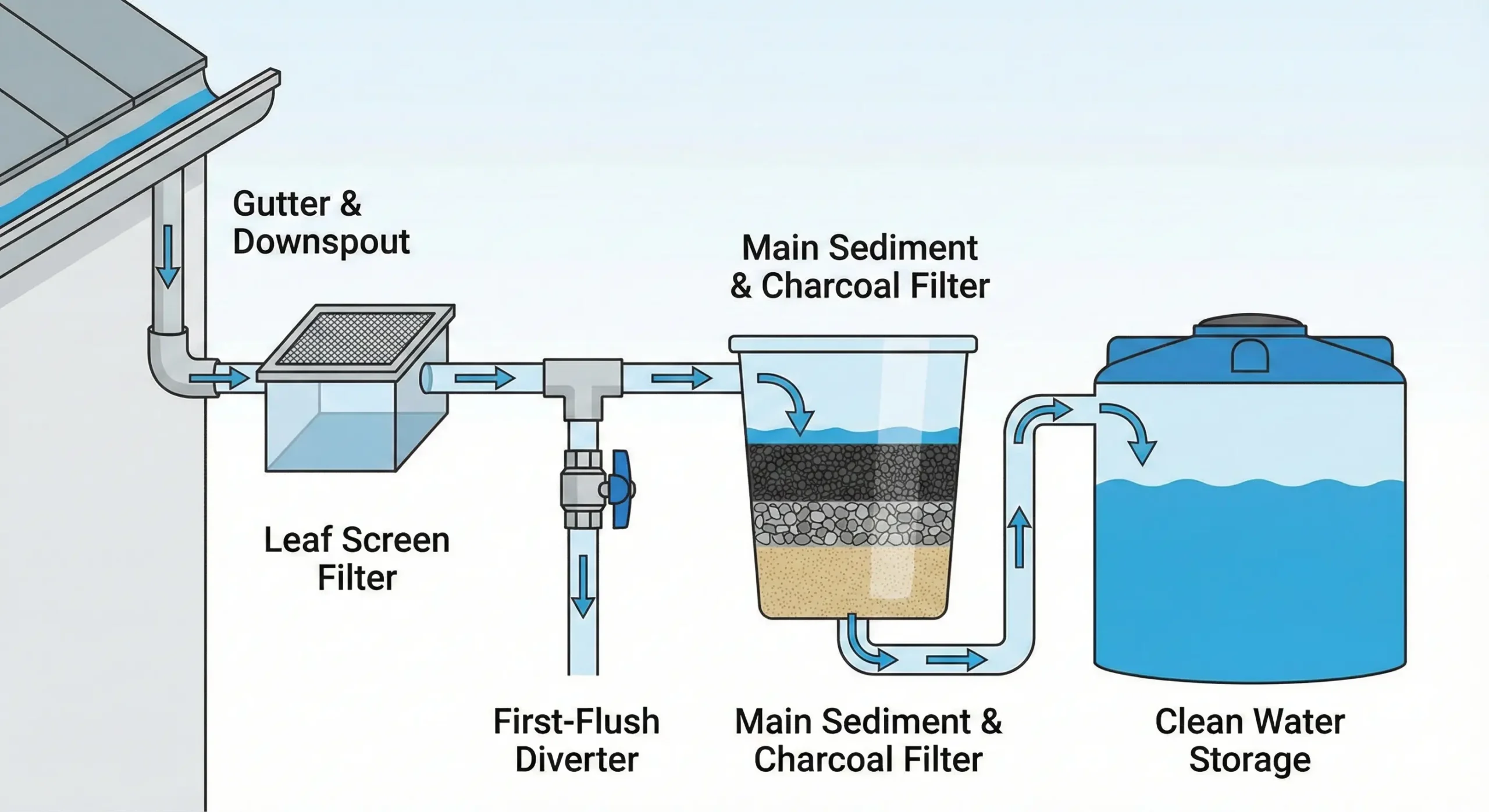 The filtration system is comparable to the lungs in our body. The component filters the water so that all the impurities are effectively removed. It can include different types of filtering mechanisms.
In most cases, Leaf Screens are used as the first lineup of filters. These are installed at gutter entries to stop large debris such as leaves, twigs, and bird nests.
There are typically two types of filters used as part of the filtration system in the rooftop rainwater harvesting system.
The filtration system is comparable to the lungs in our body. The component filters the water so that all the impurities are effectively removed. It can include different types of filtering mechanisms.
In most cases, Leaf Screens are used as the first lineup of filters. These are installed at gutter entries to stop large debris such as leaves, twigs, and bird nests.
There are typically two types of filters used as part of the filtration system in the rooftop rainwater harvesting system.
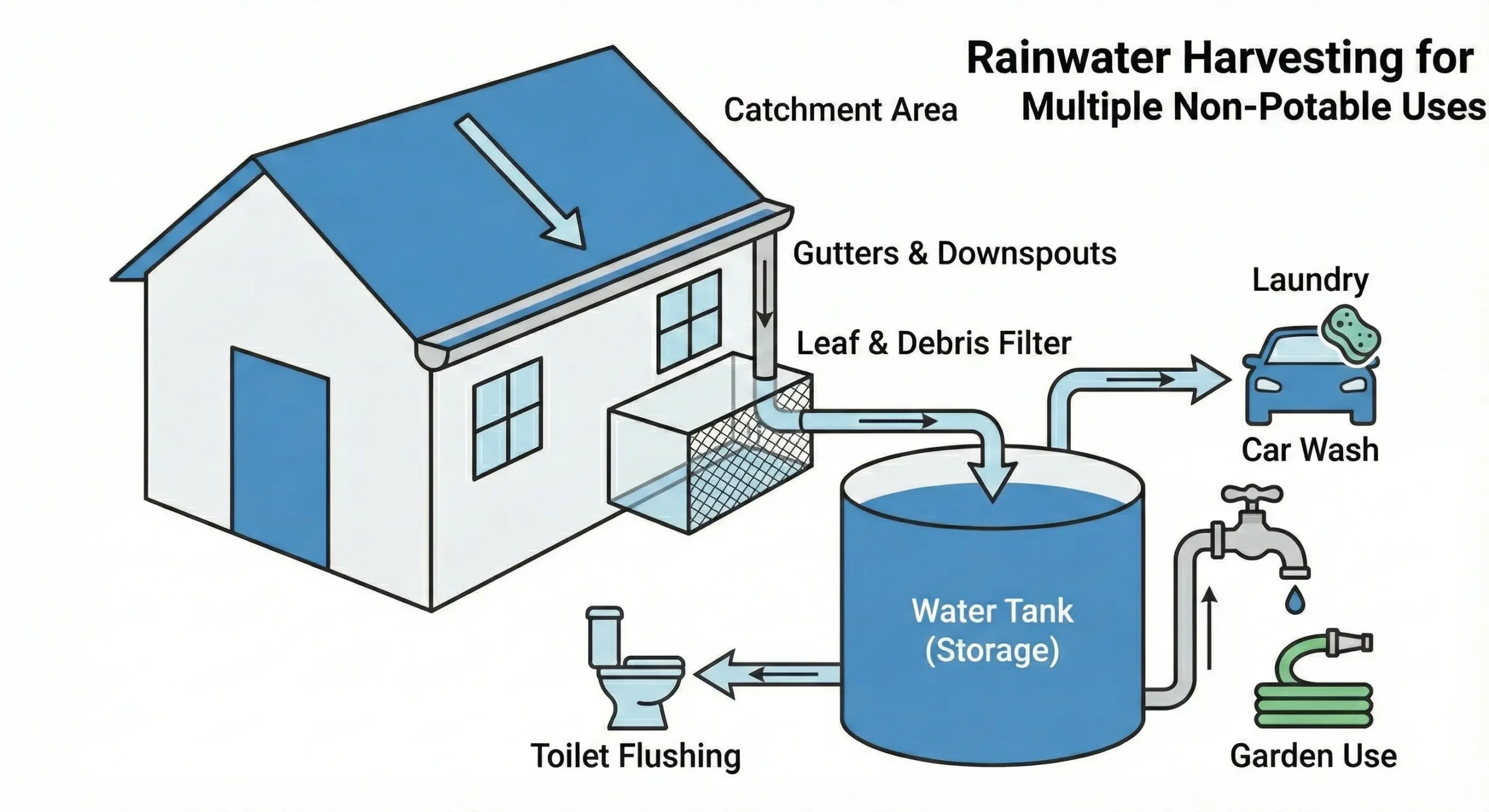 So, once all these steps are completed, the next step is to save the water for usage. The exact storage tank you use would be dependent on the exact needs you may have.
Here are a few options that we recommend –
So, once all these steps are completed, the next step is to save the water for usage. The exact storage tank you use would be dependent on the exact needs you may have.
Here are a few options that we recommend –
The Blueprint for Water Independence
At the core, the rooftop rainwater harvesting is very simple. You collect the rainwater, filter it, and then store the rainwater for direct use or for recharging the groundwater table. But it isn’t a fancy trend as you may think of. It is a practical and effective solution that addresses the critical problem of water scarcity. To begin with, you get a free and independent water supply. This will reduce your dependence on the municipal water supply. That should also reduce the increasing water tanker costs. Another benefit it offers is that it reduces urban flooding situations. The amount of runoff water is significantly reduced. Thirdly and most importantly, the rooftop rainwater harvesting refills the groundwater table. This can go a long way in preventing future water scarcity issues. This guide will help you understand the components of a rooftop rainwater harvesting system and how it works.The Core Concept: How It Works (Overview)
The core concept of rooftop rainwater harvesting is simple and does not require high-end technology knowledge. In simple terms, RRH follows a straightforward journey - Catch → Transport → Clean → Store.
When the rain falls on your rooftop, it gets wasted as such due to gravity. However, with an effective rooftop rainwater harvesting system, you can make the same gravity your best friend. The best part of the RRH is that it does not need pumps and electrical systems to collect the rainwater. The entire process of collecting the rainwater and taking it to the appropriate storage takes place naturally – thanks to gravity.
That is exactly what makes the concept and the system cost-effective. In effect, rooftop rainwater harvesting uses pure physics, and no electricity is needed for storing water.
Anatomy of a System: Detailed Breakdown of Components
Having understood the basic concept on which the rooftop rainwater system works, we will now learn in detail about the components that form part of the entire system. That should help you build a rainwater harvesting system that perfectly works for you.The catchment area
In the case of rooftop rainwater harvesting, your roof becomes your catchment area. It is the surface that catches water. The system then channelises the water to the system. However, you may need to make a few changes based on the exact roof type you have.
- Best materials - Concrete (RCC), galvanized iron (GI) sheets, and ceramic tiles are your ideal catchment surface
- What should you avoid – Avoid materials like asbestos roofs, roofs with lead flashing, and surfaces with chemical coatings. These materials can contaminate the water.
Transportation system
This includes gutters and downpipes. Once the rainwater is collected on your rooftop, it needs a channel to flow further. Gutters are the channels that are fixed at the edge of the roof. They help the water to flow down. Downpipes are the vertical channels that guide the water below.
- Material choices – PVC gutters should be an excellent choice, and lightweight. Aluminium gutters can also be used as they are corrosion-resistant and highly durable.
- Slope – Slope of the gutters matters a lot. This will make sure that the water does not stagnate. A slope of 1:100 is highly recommended.
The first flush diverter
Also called the Gatekeeper, the diverter removes everything that is included in the first flush of water. This would include bird droppings, dust, leaves, pollen, and other debris.
The first flush diverter is a T junction or a small chamber at the beginning of the main storage tank. It uses a floating valve that seals the chamber. Thus, diverting the water into a separate pipe that goes to waste.
It is important to use a Rule of Thumb. Divert approximately 0.5 liters per square meter of roof area for the first flush. For a typical 100 square meter roof, that's about 50 liters of initial water being diverted—a small sacrifice to ensure the quality of the rest.
The filtration system
The filtration system is comparable to the lungs in our body. The component filters the water so that all the impurities are effectively removed. It can include different types of filtering mechanisms.
In most cases, Leaf Screens are used as the first lineup of filters. These are installed at gutter entries to stop large debris such as leaves, twigs, and bird nests.
There are typically two types of filters used as part of the filtration system in the rooftop rainwater harvesting system.
- Traditional filters – These include layering with sand, gravel and charcoal. These are quite inexpensive and help remove suspended impurities. They would require manual cleaning.
- Modern filters – This includes wall mounted filtration systems like commercial filters. They use centrifugal forces to clean the water. They are highly compact and automated in many cases.
Storage system
So, once all these steps are completed, the next step is to save the water for usage. The exact storage tank you use would be dependent on the exact needs you may have.
Here are a few options that we recommend –
- Underground Sumps: Larger capacity, protected from sunlight (which prevents algae growth), and cooler. These are ideal if you have space below your house.
- Overhead or Surface Tanks: Plastic or masonry tanks placed on terraces or elevated ground. They use gravity to provide water pressure for household use.
System Functionality: Two Main Approaches
The rooftop rainwater harvesting system serves two specific purposes. The setup specifically depends on what you are looking to achieve. System for Direct Use This is the most common approach used in many setups. The configuration is quite straightforward - Roof → First Flush Diverter → Filter → Sump or Tank → House Usage. The water collected from the rooftop is stored in the tanks and used directly for every other purpose other than drinking. These would include gardening, car washing, toilet flushing, and laundry. The water may not be potable. With this system, you can reduce your dependence on municipal water supply by 25 to 50%. The water is available for immediate usage. System for Groundwater Recharge If you live in water scarce areas, this should prove to be a significant step. You will be redirecting the water to the underground aquifers. The system has different components than those used in storage systems.- Recharge Pits – These pits are lined with rocks, sand and gravel. This will help in a slow seepage of water back into the ground. These are typically 1 to 2 meters deep and located in the horizontal surfaces like courtyards and gardens.
- Borewell injection – The method should work well if you have a dried borewell or low yielding well. The system directs the collected water to the borewell casing. This will allow the water to seep through the aquifers. Over time and multiple monsoons, this revives the borewell, sometimes bringing it back to productive levels.
Maintenance Checklist for Rooftop rainwater harvesting
Of course, the rooftop rainwater harvesting system is simple and straightforward. That ideally makes it low maintenance. However, a regular maintenance and upkeep is necessary to keep the system working in good condition monsoon after monsoon. Here is a maintenance checklist that should help you get the best possible lifespan for your rooftop rainwater harvesting system. Pre-Monsoon maintenance- Clean your roof surface thoroughly to remove accumulated dust and debris
- Clear gutters of dry leaves, branches, and any blockages
- Check gutters for cracks or damage and repair as needed
- Inspect downspouts to ensure they're clear and flowing smoothly
- Test your first-flush diverter to ensure the floating ball valve moves freely
- If you have a manual first-flush system, empty the diverter pipe after each rain event (don't let it sit with dirty water for days)
- Monitor your tanks for any overflows or blockages
- Check filter screens for excessive debris and clean if necessary
- Observe the water level in your tanks—this helps you understand your storage capacity versus rainfall
- Backwash or thoroughly clean your main filter element or mesh screen
- Drain and inspect your underground sump for any sediment buildup
- Check all pipes and connections for cracks or leaks
- Clean the overflow and drain pipes to ensure they're clear for next season
- Inspect tank lids and screens for damage—repair any openings that might allow mosquitoes
Conclusion
Rooftop rainwater harvesting is not a concept that comes from a science fiction movie. It is a proven and time tested method that helps address the water scarcity in many parts of the world. India is not an exception and there are several service providers helping users in installing the rainwater harvesting systems. Installers like EuroGuard help the communities and building societies in creating the best ways to take care of water scarcity. You can invest Rs 30000 to Rs 1 Lakh to install capable systems (depending on our roof size) and secure the water for generations to come. Ready to take the next step? Calculate your roof area, estimate your annual rainfall (check your local weather data), and determine how much water you can realistically harvest. Then consult a local expert or engineer who understands your region's specific needs. Most importantly, don't wait for the next water crisis to act. The monsoon is coming, and your roof is ready to help you capture it.More Blogs
![We are in the summer, and the water bills are rising. That is perhaps why it has become ever more important to learn how to use every drop of water wisely. Yes, we are talking about water scarcity. In 2024, it was estimated that approximately 2.2 billion people lacked access to safe drinking water. This […]](/_next/image?url=https%3A%2F%2Fadmin.euroguardhysquare.com%2Fwp-content%2Fuploads%2F2026%2F03%2FBlue-and-Yellow-Illustration-Freelance-Web-Developer-Presentation-1.jpg&w=3840&q=100)
![If you are in Chennai, you might have experienced this situation. The monsoon floods the streets in such a way that citizens need to wade through the water to reach their homes. In contrast, come May, the same citizens stand in queue for tankers to meet their demands. This strange and ironical issue can appear […]](/_next/image?url=https%3A%2F%2Fadmin.euroguardhysquare.com%2Fwp-content%2Fuploads%2F2026%2F02%2Frainwater-harvesting-chennai-guide.jpg&w=3840&q=100)
![Living in an apartment does come with many amenities. But it also comes with several challenges. Rising water bills can perhaps be one of the biggest problems that middle-class families are most likely to face. Add to it the sudden disappearance of water or other issues you may face. In an apartment, you are competing […]](/_next/image?url=https%3A%2F%2Fadmin.euroguardhysquare.com%2Fwp-content%2Fuploads%2F2025%2F09%2FOrange-Modern-Business-Marketing-Blog-Banner-3.png&w=3840&q=100)
Get in touch with us
Phone
1800 833 6675 