02 Nov 2026
How Rainwater Damage Shows Up in Walls, Ceilings and Foundations
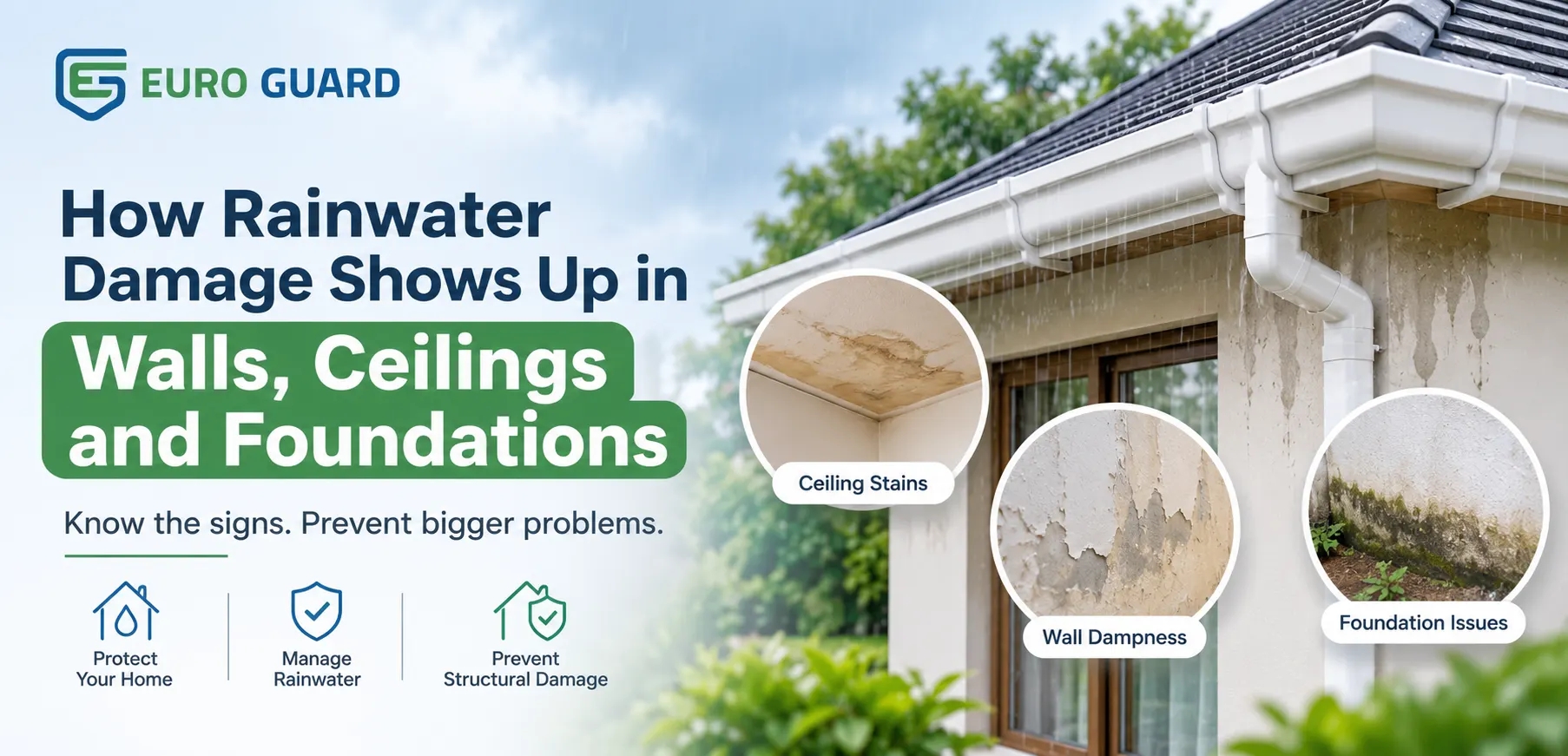
Rainwater damage to a house does not always begin with a major leak or flooding. During the monsoon, rainwater can repeatedly run off the roof, spill over its edges and collect around the building. Over time, this exposure can leave walls damp, cause ceiling stains and affect the soil supporting the foundation. Some signs appear gradually, making it easy to mistake early damage for ordinary wear and tear.
Recognising these warning signs helps homeowners identify moisture problems before they become more serious. Understanding where the water comes from and how to manage roof runoff can also help prevent recurring damage. In this blog, we will explore the signs of rainwater damage in walls, ceilings and foundations, the common causes, and the steps you can take to prevent it.
How Uncontrolled Rainwater Damages a House
Uncontrolled rainwater damages a house when water from the roof and surrounding surfaces is allowed to flow down exterior walls, collect near the foundation or seep into building materials. A properly managed drainage system gives rainwater a controlled route away from vulnerable parts of the building. Without one, repeated exposure to moisture can affect several areas:- Exterior walls: Roof runoff flowing directly down walls can keep plaster and paint wet for extended periods. Repeated exposure can cause discolouration, peeling and surface deterioration.
- Roof and ceiling: Poor roof drainage can allow water to accumulate on roof surfaces. Existing cracks, damaged waterproofing or vulnerable joints may then provide entry points for water.
- Ground around the house: Water discharged close to the building can saturate the surrounding soil. During heavy or prolonged rainfall, concentrated runoff can also wash away loose soil.
- Building materials: Repeated wetting and drying can damage paint, plaster and other moisture-sensitive materials. Persistent dampness can also encourage mould growth.
What Are the Signs of Rainwater Damage on Walls?
Wall dampness caused by rainwater often appears as discoloration, peeling paint, white deposits, or mold. These signs can develop on exterior walls as well as interior surfaces where moisture has penetrated the building. Look for the following signs of water damage in house walls:- Damp patches and darkened plaster: Moisture entering through exterior walls can leave darker areas on the surface. These patches may become more noticeable during or after rainfall.
- Peeling or bubbling paint: When moisture accumulates behind paint, the coating may lose adhesion. This can cause bubbles, blisters, peeling or flaking.
- White salt deposits (efflorescence): Water moving through masonry can carry dissolved salts towards the surface. When the water evaporates, these salts may remain as a white, powdery deposit.
- Algae, moss or black mould: Persistently damp surfaces can support algae and moss growth outdoors. Indoors, moisture can create conditions suitable for mould growth, particularly in poorly ventilated areas.
- Cracks in plaster and flaking surfaces: Prolonged moisture exposure can contribute to the deterioration of plaster and surface finishes. Existing cracks can also allow additional water to enter.
- Musty indoor smells: A persistent earthy or musty smell near a wall may indicate hidden dampness or mould, even when the affected area is not clearly visible.
What Are the Signs of Rainwater Damage on Ceilings and Roofs?
Ceiling water stains, peeling paint and sagging surfaces are common warning signs of moisture entering through the roof or an upper-level structure. These problems may become more visible during heavy rainfall or shortly afterwards. Watch for these signs:- Yellow or brown water stains: Discoloured patches, often with darker edges or ring-like patterns, can indicate that water has seeped through the roof or ceiling.
- Sagging or bulging ceiling areas: A ceiling that appears swollen, uneven or bowed may have absorbed moisture. This needs prompt professional assessment, as a water-weakened ceiling can become unsafe.
- Blistering or flaking paint: Moisture trapped beneath the paint can cause the coating to bubble, crack or separate from the ceiling.
- Dripping during or after rainfall: Water dripping from the ceiling is a clear indication that water is entering the building. The leak may originate from damaged roofing, joints or waterproofing.
- Mould in corners and along edges: Dark spots or mould growth around ceiling corners, roof junctions and wall edges can indicate persistent moisture.
- Waterlogging and algae on roof surfaces: Standing water on flat roofs or poorly drained sections can encourage algae growth. It may also expose existing waterproofing weaknesses to prolonged moisture.
What Are the Signs of Rainwater Damage in Foundations and Around the House?
Foundation water damage can develop when rainwater repeatedly collects near the base of a building or enters the ground around it. The resulting moisture and soil movement may affect the surrounding structure, depending on the soil conditions, drainage and construction. Some important warning signs include:- Soil erosion near the foundation: Concentrated roof runoff can wash away loose topsoil, exposing parts of the foundation or creating depressions near exterior walls.
- Water pooling around the house: Puddles that remain near the building after rainfall may indicate inadequate surface drainage or downpipes discharging too close to the foundation.
- Cracks at the plinth or in floors: New or widening cracks around the base of the building, plinth or adjacent flooring may indicate movement or settlement. These should be assessed rather than automatically attributed to rainwater.
- Dampness at ground level: Moisture appearing along the lower sections of walls may be associated with water entering from the surrounding soil. Rising damp and plumbing leaks are other possible causes.
- Sunken or displaced interlock tiles and driveways: When water washes away or displaces the supporting soil beneath outdoor paving, tiles may become uneven, sink or shift out of position.
What Causes Rainwater Damage to a House?
Rainwater damage usually results from poor water management, inadequate drainage or weaknesses in the building envelope. Identifying the source helps determine which preventive measures and repairs are necessary. Common causes of rainwater damage include:- No gutter system or undersized gutters: Without gutters, roof runoff can fall directly along exterior walls and collect near the building. Gutters with insufficient capacity may overflow during heavy rainfall.
- Blocked or overflowing gutters: Leaves, dirt and other debris can obstruct water flow. When gutters cannot drain properly, water may spill over their edges or accumulate along the roofline.
- Leaking joints and poorly positioned downpipes: Loose connections, damaged joints and incorrectly positioned outlets can allow water to escape before it reaches a suitable drainage point. Downpipes that discharge beside the foundation can also concentrate runoff near the building.
- Poor slope or surface drainage: If the ground slopes towards the house rather than away from it, rainwater can collect near the foundation instead of draining away.
- Roof leaks and failed waterproofing: Damaged roofing sheets, cracked surfaces, deteriorated seals and defective waterproofing can allow rainwater to enter ceilings and walls.
Why Does Early Detection of Water Damage Matter?
Early detection helps limit the spread of moisture and reduces the likelihood of more extensive repairs. What begins as a small damp patch can develop into deteriorating plaster, damaged finishes and, in certain circumstances, more serious building problems. There are three main reasons not to ignore the warning signs.- Surface damage can develop into more serious deterioration
- Persistent dampness can affect indoor air quality
- Delayed repairs can increase costs
When Should You Call a Professional?
If you notice any of the following signs, it may be time to have your home inspected:- Water dripping from ceilings or entering through walls.
- Damp patches that repeatedly return after rainfall.
- New or widening cracks near the plinth or foundation.
- Persistent mould growth or musty indoor smells.
- Sagging ceilings, bulging surfaces or loose plaster.
- Soil erosion or recurring water accumulation around the building.
How Do Gutters Help Prevent Rainwater Damage?
Rainwater gutters help prevent damage by collecting runoff from the roof and directing it towards designated outlets and downpipes. Instead of allowing water to spill along the roof edges and run down exterior walls, a gutter system provides a controlled drainage route. A properly sized and installed gutter system offers several benefits:- Keeps exterior walls drier: Gutters collect roof runoff before it flows directly down the walls. This helps reduce repeated water exposure that can contribute to damp patches, paint deterioration and algae growth.
- Controls water discharge near the foundation: When connected to correctly positioned downpipes, gutters direct roof runoff towards suitable drainage areas, helping reduce water accumulation around the building.
- Helps protect soil and outdoor surfaces: Controlled discharge reduces concentrated runoff along the roofline, helping limit soil erosion and damage to interlock tiles and landscaping.
- Reduces roof water accumulation: By providing an outlet for roof runoff, gutters help minimise waterlogging at roof edges and support effective drainage. Roof slope, outlets and waterproofing must also be adequate.
What Makes Euro Guard Rainwater Gutters Suitable for Home Protection?
Euro Guard offers uPVC rainwater gutter systems designed to channel roof runoff while complementing the building's exterior. Key features of Euro Guard’s gutter systems include:- High flow capacity: Designed for efficient rainwater drainage, Euro Guard gutters help manage roof runoff even during heavy rainfall.
- UV-stabilised technology: The gutters use UV-stabilised uPVC, a feature intended to help the material withstand exposure to sunlight.
- Weather-resistant construction: The gutters are designed to withstand different weather conditions, including heavy rain, humidity, salty sea air, snow and heat.
- Leaf Guard: The optional leaf guard uses a clipped uPVC net to help prevent leaves and debris from entering the gutter and obstructing water flow. It can reduce blockages, although periodic inspection remains important.
- Design that blends with the building: The square-line profile sits close to wall surfaces and is designed to complement different building exteriors.
What Other Steps Can Help Prevent Rainwater Damage?
Gutters are an important part of rainwater management, but they work best when combined with proper roof maintenance and ground drainage. A few additional precautions can help reduce moisture problems around the house.- Clean gutters before and after the monsoon: Remove accumulated leaves, twigs and dirt so that water can flow freely through the gutter and downpipe. Inspect joints, connections and outlets for damage or blockages.
- Check ground slope and drainage: Ensure that the ground around the house allows surface water to drain away rather than collect near the foundation. Address areas where water repeatedly pools.
- Repair roof leaks promptly: Inspect roofing materials, joints, flashing and waterproofing for cracks or deterioration. Arrange repairs when signs of water entry appear.
- Address damaged plaster and cracks: Repair deteriorating exterior plaster and seal suitable openings to reduce opportunities for rainwater to penetrate the walls. If cracks are structural, seek a professional assessment before carrying out surface repairs.
- Position downpipe outlets correctly: Direct collected rainwater towards a suitable drainage system or designated collection point rather than allowing it to discharge immediately beside the foundation.
- Consider rainwater harvesting: A rainwater harvesting system can collect roof runoff through gutters, filter it and channel it into storage tanks for reuse. It can also provide a planned route for managing excess water.
Protect Your Home from Rainwater Damage with Euro Guard
Rainwater damage often develops gradually, making early warning signs easy to overlook. Damp patches on walls, ceiling stains, peeling paint and water accumulation around the foundation can all indicate drainage or moisture problems. Identifying the source early and addressing issues such as roof leaks, poor surface drainage and inadequate rainwater management can help prevent further deterioration and avoid more extensive repairs. Euro Guard offers uPVC rainwater gutter systems designed to collect roof runoff and channel it away from exterior walls. With features such as high flow capacity, UV stabilisation and optional leaf protection, its gutter range helps manage rainwater effectively while complementing the building's exterior. Explore the Euro Guard rainwater gutter range or contact the team for guidance on choosing a suitable system for your roof.More Blogs


Get in touch with us
Phone
1800 833 6675 